Spotted Gum vs Blackbutt Flooring: Colour, Grain and Finish Compared
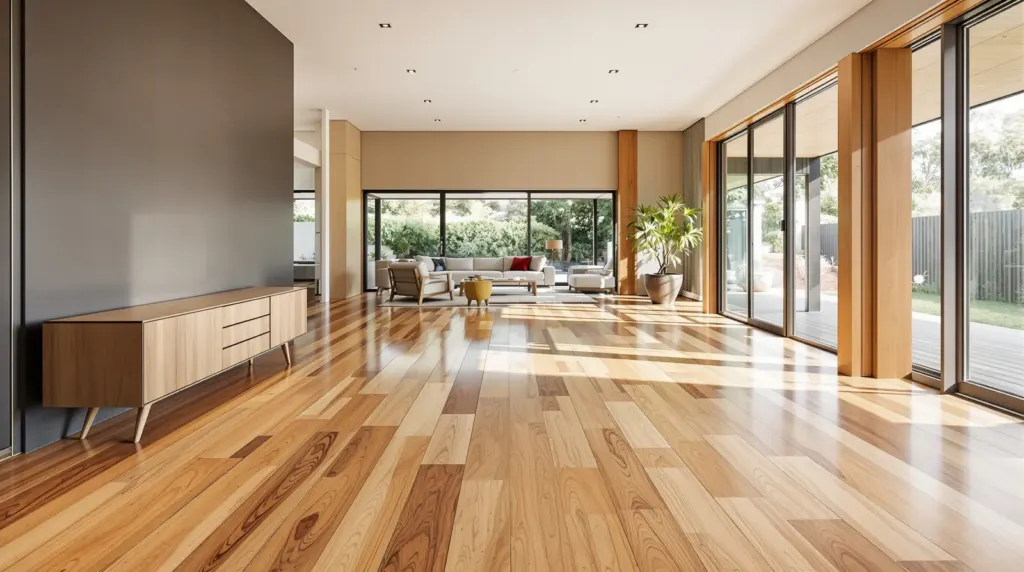
Two popular Australian floor timbers compared: how Spotted Gum and Blackbutt differ in colour, grain and variation, and which finish suits your house.
Read the guide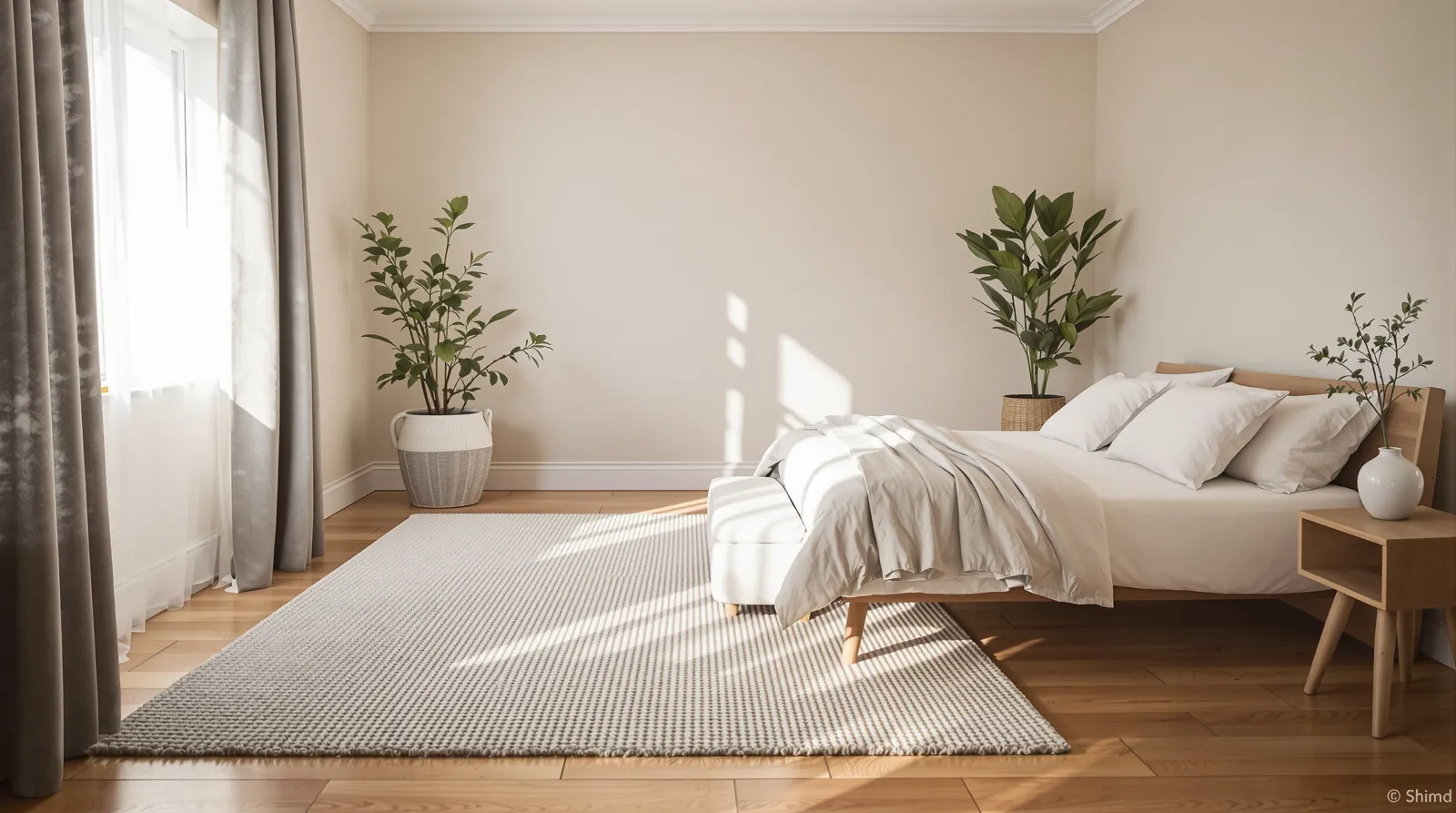
Quick answer
For most bedrooms timber is the better long-term choice, paired with a rug beside the bed. It is easier to clean, lasts longer and runs on from the hallway. Carpet is warmer underfoot and quieter for the room below, which matters most upstairs. Who sleeps underneath and how cold the floor gets usually decide it.
For most bedrooms, timber is the better long-term choice particularly with a rug beside the bed. It is easier to keep clean, lasts longer and ties the bedrooms to the rest of the house. Carpet has the advantage for warmth underfoot and for keeping noise down, especially upstairs. The deciding questions are usually who sleeps below the room, how cold the floor gets in winter, and how much you like the feel of carpet first thing in the morning.
This is where carpet has a real advantage. A carpeted floor feels warm to bare feet, and a hard floor feels cool, even when both are at the same temperature. On a July morning in a house without underfloor heating, the difference is noticeable.
How cold a timber bedroom feels depends a lot on what’s under it. A bedroom on a concrete slab feels cooler than one upstairs over a heated living area. An older house on stumps can be draughty through gaps in the floor and around vents, and a new floor over well-prepared old boards often feels less draughty than the tired carpet it replaced, because the gaps get closed off.
The usual answer is a rug. A large rug that runs under the bed and out either side gives you something warm to step onto, and leaves the rest of the floor easy to clean. Slippers do the rest.
As flooring specialists rather than medical professionals, we aren’t in a position to make health claims. If someone in your house has asthma or allergies, ask your GP or specialist what they recommend. What we can describe is how the two floors behave.
Carpet holds dust, hair and whatever gets tracked in, down in the pile where you can’t see it. Vacuuming lifts some of it. A hard floor doesn’t hold much at all. Dust sits on the surface where you can see it, and a vacuum with a hard-floor head or a damp mop removes it. Some people find that reassuring, while others would rather not see the dust.
Rugs on a timber floor sit somewhere in between. You can take them outside, wash the smaller ones, or replace them far more cheaply than a whole room of carpet.
If the bedroom is upstairs, think about who is underneath. Footsteps on a timber floor carry to the room below more than footsteps on carpet do. In a two-storey house, that might be the living room where someone is watching TV while a teenager walks around upstairs at midnight.
A few things reduce it: a suitable underlay under a floating floor, rugs over the main walking routes, and felt pads under every chair and bedside table. In an apartment, the building’s rules may set what you have to do, which we cover in our guide to soundproof flooring for apartments.
Inside the bedroom itself, a hard floor makes the room a little more echoey. Curtains, a bedhead, a rug and soft furnishings take that away quickly, and a bedroom usually has plenty of all of those.
| Carpet | Timber | |
|---|---|---|
| Warmth underfoot | Warm | Cool without a rug |
| Noise to rooms below | Quieter | Louder, reduced by underlay and rugs |
| Cleaning | Holds dust in the pile | Dust sits on the surface and wipes up |
| Stains and spills | Can soak in and stay | Wipe up if caught quickly |
| Wear over time | Flattens along walking paths | Can be recoated, and engineered boards can be sanded within their wear layer |
| Look through the house | Breaks the floor at each bedroom door | Can run continuously from the hallway |
We aren’t able to put a figure on what timber bedrooms add to a sale price, and we would treat any such figure with caution. What we hear from customers is simpler. When they go to open inspections, worn bedroom carpet makes a house look like it needs work, while a continuous timber floor from the hall into the bedrooms looks finished.
There is also a practical point. Carpet in bedrooms usually needs replacing well before a good timber floor does. If you’re planning to stay a long time, that matters more than resale.
Bedrooms are the gentlest rooms in the house, so you have more freedom here than in a kitchen or hallway.
Victorian Ash is softer than Blackbutt or Spotted Gum and marks more easily, which is a reason to keep it out of a busy hallway. In a bedroom that barely sees shoes, that doesn’t matter, and its pale, straight grain looks calm. See Victorian Ash smooth.
Colour doesn’t change the temperature, but a warm mid-brown floor makes a bedroom feel more comfortable to most people than a cool grey. Oaks like Caramel Sundae and Natural Oak on our warm browns page are a good starting point. They also hide dust better than very pale or very dark boards. Our guide on how to choose a timber floor colour goes further.
If the bedrooms open off a timber hallway, use the same board and run it straight through. A threshold strip at every bedroom door breaks the floor up and creates an edge that is easy to stub a toe on.
Kids’ bedrooms are where the argument for timber is strongest, and where the argument for something soft is strongest too.
On the timber side: spilt drinks, craft glue, slime and the occasional night-time accident come off a hard floor with a cloth. On carpet they tend to stay. Wheeled toys roll easily, block towers stand up, and small pieces like Lego are easier to spot. When the child grows out of the room, the floor doesn’t need replacing with them.
On the soft side: babies and toddlers spend a lot of time sitting and crawling on the floor, and falls are part of learning to walk. A thick play mat or a large rug covers the play area without committing the whole room to carpet, and it can go in the wash or be replaced as the child grows.
A matte brushed surface is the practical choice here, because it hides the scuffs from toy cars and chair legs better than a smooth, glossier finish. We recommend felt pads under the desk chair from the start.
Replacing bedroom carpet with timber is one of the most common jobs we do. The carpet comes up with its underlay, the gripper strips around the walls and every staple, and it all gets taken away. Then the subfloor is checked. Upstairs that is often particleboard sheeting, which may need loose sheets screwed down and squeaks fixed before new boards go over it. Our floor removal and subfloor page explains this part.
Doors often need trimming, because a timber floor can sit at a different height from the carpet it replaces. Built-in robes need emptying if the floor is going inside them. If the stairs are carpeted, it’s worth thinking about them at the same time, since a carpeted stair between two timber floors looks unfinished. Our stairs page covers the options.
The work need not take long. One customer had the carpet upstairs replaced with timber in three days. Another told us how much better their upstairs rooms looked with the new timber. The time for your house depends on the area, the stairs and what turns up under the carpet.
You don’t have to do every bedroom the same way. Some families put timber in the main bedroom and hallway and keep carpet in a child’s room for now, or the other way round. Please plan the transitions carefully, and if you might do the rest later, buy enough boards now from the same batch so the colour matches.
If you’re undecided, take two or three samples home and put them on the bedroom floor for a few days, next to your bedding and furniture. When you’re ready, book a free measure and quote. We’ll lift a corner of the carpet to see what’s underneath, measure the rooms and robes, and price the stairs as a separate line if you want them done. You’re also welcome to call 1300 690 160 or visit us at 2/1386 Toorak Road, Camberwell.
Questions
It feels cooler to bare feet than carpet, particularly on a slab in winter. A large rug under and beside the bed, and slippers, solve most of that. In older houses on stumps, a new floor over properly prepared boards can actually feel less draughty than worn carpet.
Footsteps carry more to the room below than on carpet. A suitable underlay, rugs along the main walking routes and felt pads under furniture reduce it considerably. If the room below is a living area used late at night, please mention it at the measure so we can plan the installation around it.
Yes. Many people do the bedrooms and hallway first and leave other rooms for later. Plan the joins at doorways, and if you think you'll extend the floor, buy extra boards from the same batch now so the colour matches when you do.
Often, yes. A timber floor can finish at a different height from the carpet and underlay it replaces, so some doors need a small amount taken off the bottom to swing freely. We check each door during the measure so it is included in the quote.
Two popular Australian floor timbers compared: how Spotted Gum and Blackbutt differ in colour, grain and variation, and which finish suits your house.
Read the guideHybrid and laminate look alike in the showroom but behave differently at home. Here is how the cores, water resistance, sound and feel compare, room by room.
Read the guideBoth are real timber. The difference is below the surface, and it decides how the floor goes down, how it moves and how many times it can be sanded.
Read the guideFree measure & quote
Let us know your suburb and we will call you to arrange a time. Our quotes are itemised, so you can see the boards, preparation and labour separately.