Wide Plank Oak Flooring: Pros, Cons and When It Makes Sense
Wide boards look calmer in big rooms but ask more of the subfloor. How 2200 × 220 mm oak compares with a standard plank, with a worked room example.
Read the guide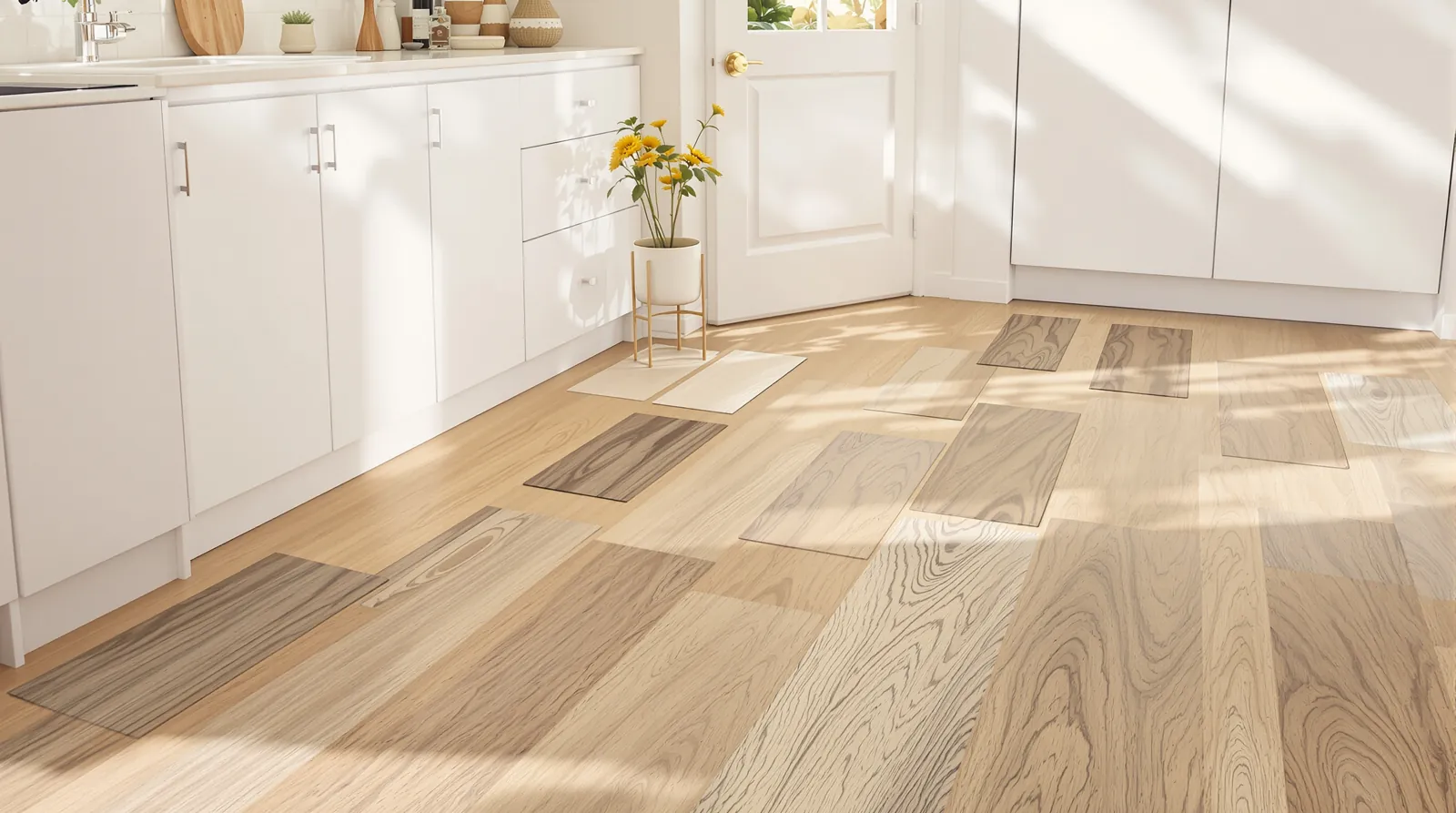
Quick answer
Start with the room's light: north-facing Melbourne rooms push floors warmer, south-facing rooms make greys look cool. Then match the tone to the joinery, benchtops and trim you're keeping, and think about what it must hide, since mid tones show dust and scratches least. Test samples on your own floor, morning and night.
To choose a timber floor colour, start with the light in the room, then look at the fixed things you are keeping, such as kitchen joinery, benchtops, doors and fireplaces, and pick a tone that sits comfortably with them. Then think about what the floor has to hide: dust, pet hair and scratches show least on mid tones. Always judge samples on the floor in your own house, morning and evening, before you decide.
We group our range into four broad tones. Each suits certain rooms, and each has a few traits worth knowing before you decide.
| Tone | Looks best | Shows most | Examples from our range |
|---|---|---|---|
| Light and blonde | Small or dim rooms, white and pale joinery, Scandinavian or coastal interiors | Dark grit, spills, dark hair | White Smoke, Valis, Blackbutt |
| Neutral and grey | Cool interiors with white or charcoal joinery, stone and black tapware | Sits in the middle for dust | Smoke Grey, French Grey, Mink |
| Warm browns | Period homes, timber furniture, cream, white or green joinery | Least of all; the most forgiving | Natural Oak, Light Tan, Caramel Sundae |
| Dark and rich | Large, bright rooms with pale walls | Dust, pale hair, scratches | Hidalgo, Nero Brown, Edgey |
You can browse each group on its own page: light and blonde, neutral and grey, warm browns and dark and rich.
The same board can look like three different colours in three different rooms. Light changes a floor more than anything else in the house, so work out what kind of light each room gets before you look at samples.
In Melbourne, rooms facing north get the most direct sun through the day, especially in winter when the sun sits low. Warm sunlight pushes every floor warmer and brighter. A pale board can look almost washed out in full sun, and a mid brown can glow. North-facing living areas are also where timber changes colour fastest over the years, so blinds or curtains help keep it even.
These get softer, cooler, indirect light. Greys can look cold and flat here, and a very dark floor can make the room feel smaller. Light and warm tones usually work better. A south-facing room is a good place to test any grey you are considering, because it shows the grey at its coolest.
West-facing rooms get harsh afternoon sun, low and hot. This light exaggerates warmth in the late afternoon, and it is the light that fades and changes floors the most over time.
Most living areas are used at night, under downlights. Warm-white LEDs can make a grey oak read almost beige. Cool-white ones make warm floors look flatter. Look at your samples under your own lights after dark, not only in daylight.
A floor is the largest surface in most rooms, but it shouldn’t be chosen in isolation. Start by looking at what isn’t changing.
If the house has a mix of warm and cool finishes, a colour that sits between grey and brown, such as Mink, can bridge the two.
This is the practical side of colour, and it’s easy to overlook in a showroom.
Very dark floors show everything that is paler than they are: dust, crumbs, pale pet hair, footprints and scratches. They look very good when freshly cleaned, but they need cleaning often. Very pale floors show dark grit and spills. Mid tones hide the most, which is why warm mid-brown oaks are such a common choice for family homes.
If you have a dog, lean the floor towards the colour of its coat. Our guide to the best flooring for dogs covers finish and colour for pet owners in more detail.
The finish matters as much as the colour. All our engineered oaks have a matte brushed surface, which hides fine scratches and dust far better than a glossier finish. Our Australian hardwoods come in a smooth 10% gloss finish or matte brushed.
Colour isn’t only about the tone. It’s also about how much the boards differ from one another, and people tend to have a strong preference once they see both side by side.
Our standard oak colours give a fairly even look across the floor, with the natural grain and the odd knot you’d expect in oak. Our reactive-finish series goes the other way. The boards are brushed and then given a reactive finish, which brings out variation from board to board, so some come out lighter and some darker. Westminster, St James and Oxburgh sit with the grey and neutral tones, and Jacobean with the lighter tones. They suit houses where a new floor shouldn’t look shiny and new, such as an Edwardian house or a room with exposed brick.
If you like a varied floor, it needs space. The variation reads best across a bigger area, and installers mix boards from several packs as they lay so light and dark boards spread evenly. In a small room, a varied board can look busy. If you want calm and uniform, stay with the standard colours.
Light floors make small or dim rooms feel bigger. Dark floors look best across a large, well-lit space and can close a small room in. That doesn’t mean small houses need pale floors, but a dark floor in a small room needs good light and pale walls to work.
In most houses, one floor colour running through the living areas and hallway looks calmer than a change at every doorway. If you want variety, change the format rather than the colour, for example herringbone in the entry and plank in the living room in the same tone.
There are no rules here, only tendencies. Californian bungalows and period houses in the eastern suburbs often suit warm mid tones, because they sit well with original skirtings, fireplaces and leadlight. A deeper brown like Hidalgo works in bigger period homes with tall ceilings and good windows. Modern extensions and new builds with concrete-look tiles, white joinery and black fittings suit greys such as Smoke Grey or a pale oak. A 1970s brick veneer house with low ceilings and small windows usually benefits from something lighter.
Remember that a sample is a small piece, and a floor is a lot of boards together. Variation that looks busy on a single sample usually settles down across a room, which is why seeing a larger display helps.
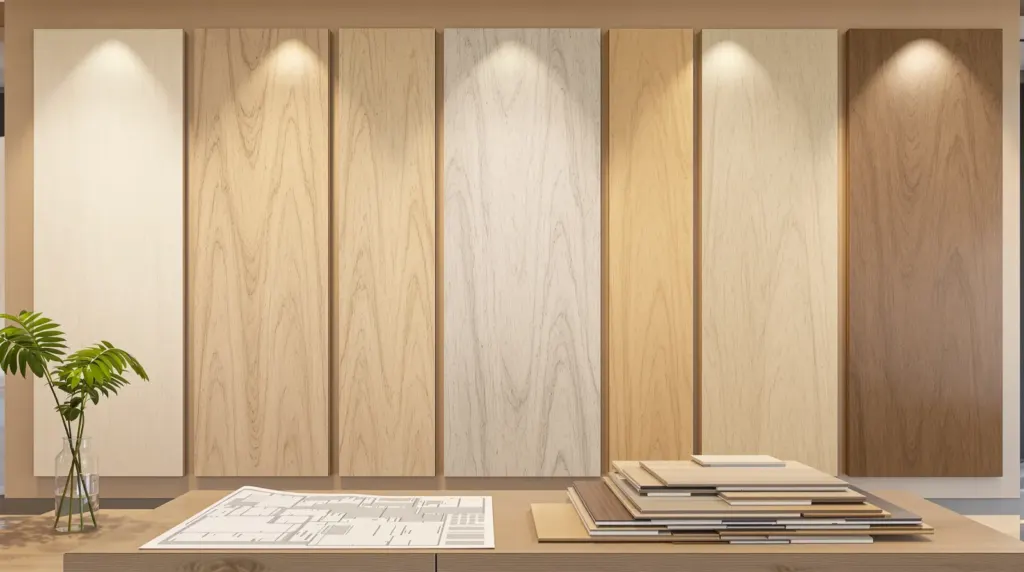
Bring photos of the room, a cabinet door or benchtop sample if you have one, and a sense of which way the main windows face. You’re welcome to visit our showroom at 2/1386 Toorak Road, Camberwell, to see the boards on the wall displays and take free samples home. If you would rather decide in your own light, call us on 1300 690 160 and ask us to bring samples to the measure.
Questions
Both do, but they show different kinds of dirt. Dark floors show dust, pale hair and footprints. Light floors show dark grit and spills. Warm mid tones hide the most, which is why they suit busy family homes. A matte brushed surface also hides fine marks better than a glossier finish.
Aim for a clear contrast or a clear relationship, not a near match. Two timber tones that are almost the same can look unintentional. Bring a cabinet door or photo to the showroom and hold samples against it to see how the undertones compare.
Yes. All timber changes colour with light, and oak tends to warm. North and west-facing rooms change fastest. Blinds or curtains, and moving rugs around now and then, keep the change even so you don't end up with pale patches.
We prefer not to predict fashion. Grey works well in houses with cool finishes such as white or charcoal joinery, stone and black fittings, and less well next to warm stained timber trim. Choose for the house you have, and it will look right for as long as those finishes stay.
Wide boards look calmer in big rooms but ask more of the subfloor. How 2200 × 220 mm oak compares with a standard plank, with a worked room example.
Read the guideNo hard floor is soundproof. What reduces noise to the apartment below, how owners corporation rules work, and choosing board and underlay as a pair.
Read the guideHow to get the most out of a visit to our Camberwell showroom when you are choosing an oak floor: what to bring, what to ask and how to judge samples at home.
Read the guideFree measure & quote
Let us know your suburb and we will call you to arrange a time. Our quotes are itemised, so you can see the boards, preparation and labour separately.