Soundproof Flooring for Apartments: What Reduces Noise
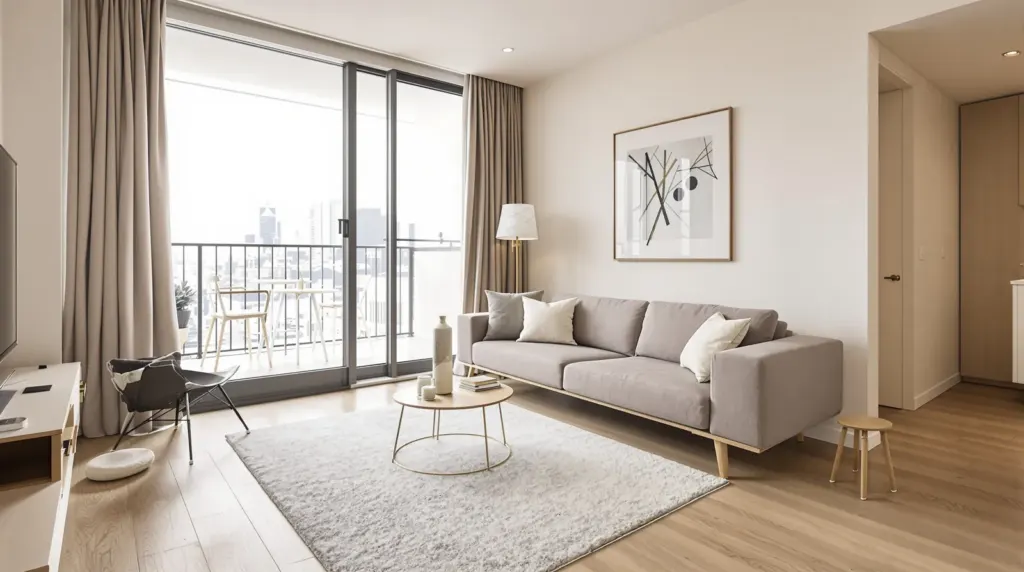
No hard floor is soundproof. What reduces noise to the apartment below, how owners corporation rules work, and choosing board and underlay as a pair.
Read the guide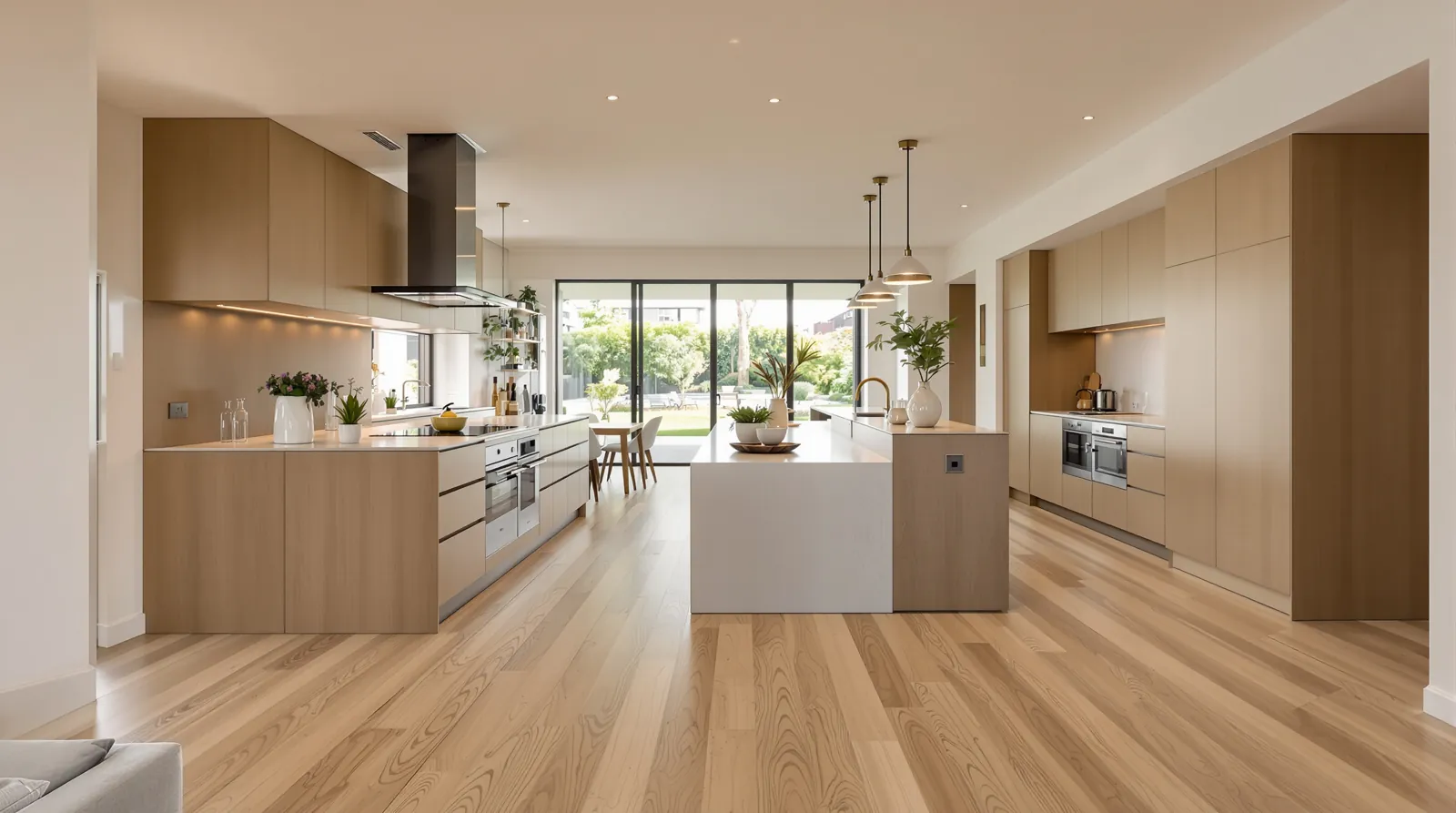
Quick answer
Wide plank oak flooring suits large open rooms and long hallways, where fewer, bigger boards look calmer and show more grain. The trade-offs are a flatter subfloor requirement, slightly more visible seasonal movement per board, and an oversized look in small rooms. Our wide board is 2200 × 220 × 15 mm engineered European oak.
Wide plank oak flooring suits big rooms and long runs, where fewer, larger boards make the floor look calmer and show more of the grain. The trade-offs are that wide boards need a flatter subfloor, show each board’s seasonal movement a little more, and can look oversized in a small room. Our wide board is 2200 × 220 × 15 mm engineered European oak, against 1900 × 190 × 15 mm for our standard plank.
Both boards are built the same way. The difference is size, which changes how the floor looks and a few practical things about laying it.
| Wide board | Standard plank | |
|---|---|---|
| Size | 2200 × 220 × 15 mm | 1900 × 190 × 15 mm |
| Wear layer | 4 mm European oak | 4 mm European oak |
| Surface | Matte brushed, micro bevel | Matte brushed, micro bevel |
| Joint | Tongue and groove | Tongue and groove |
| Pack | 6 boards, 2.904 m² | 6 boards, 2.166 m² |
| Colours | 7 | 11 |
Each wide board covers 0.484 m², against 0.361 m² for a standard plank, so a wide board floor uses about a quarter fewer boards for the same area.
Take an open living and dining area 7 metres long and 5 metres wide, with the boards running the long way.
You don’t consciously count joins when you walk into a room, but you do notice the effect. A big floor in wide boards looks quieter and more solid. The same floor in narrower boards has more lines and more rhythm, which some people prefer. Both are valid choices.
This is the main case for them. In a knock-down rebuild or a long rear extension where the kitchen, dining and family room run together, standard planks can start to look busy over that distance. Wide boards help the space read as one floor.
A wide board down a long hall in a bigger period house pulls the eye towards the end of it. It works best where the hall is generous; in a narrow corridor, a board this wide can leave you with only four or five rows.
A wider, longer face shows more of the oak’s figure, including knots and colour changes along the board. If you like a floor with some character, the wide format gives it more room.
A longer, wider board is less forgiving of dips. A low spot that a shorter board would bridge can leave a wide board rocking slightly or sitting proud at the joins. The installer should check flatness carefully and level where needed, and that work should appear on the quote. Our floor removal and subfloor page explains what that preparation involves.
All timber moves across its width as the air gets drier or more humid. Each wide board moves a little more than a narrower one, so in a dry Melbourne winter with the heating on, any gaps that open show as fewer but slightly wider lines. Engineered construction keeps this movement small, which is why wide formats are almost always engineered, but it doesn’t remove it.
Cupping is when the edges of a board rise above its centre, usually because the underside has taken on more moisture than the top. Any board can cup if moisture comes up from a slab or a damp subfloor, and a wider board shows it more. The protection is the same for every floor: a moisture test on concrete, a barrier where needed, and ventilation under suspended timber floors.
In a small bedroom or study, wide boards can look oversized, and you may only see a few full-length boards in the whole room. The wide board also comes in seven colours, against eleven in the standard plank.
On a concrete slab, which covers most new builds and extensions, the wide board is normally glued down. That gives it the solid feel wide boards suit, but it means the slab has to be moisture tested first and ground or levelled where it falls outside the flatness limit. New slabs in particular can hold moisture for a long time after they look dry.
On a timber subfloor, such as particleboard upstairs or old boards on joists in an older house, the tongue and groove board is fixed over the top once the base is firm and flat. Old floors on stumps often have cupped boards, soft spots or a hump over a bearer. A standard plank can tolerate a little of that, but a 2200 mm board generally can’t, so please allow for more preparation in an older house if you would like wide boards.
White Smoke, Natural Oak, Light Tan, Edgey and Blank also come in the standard plank, so you can use the same colour in both formats. The whole range is on our engineered oak page.
Working out quantities is simple once you have the areas. Wide board comes in packs of 2.904 m², and our guide on how much flooring you need walks through the waste allowance and pack maths.
Prices aren’t published on our site, because the board is only part of the total. Choosing wide boards does affect several lines on a quote, and it helps to know which ones before you compare.
We recommend asking for an itemised quote so you can see these lines separately.
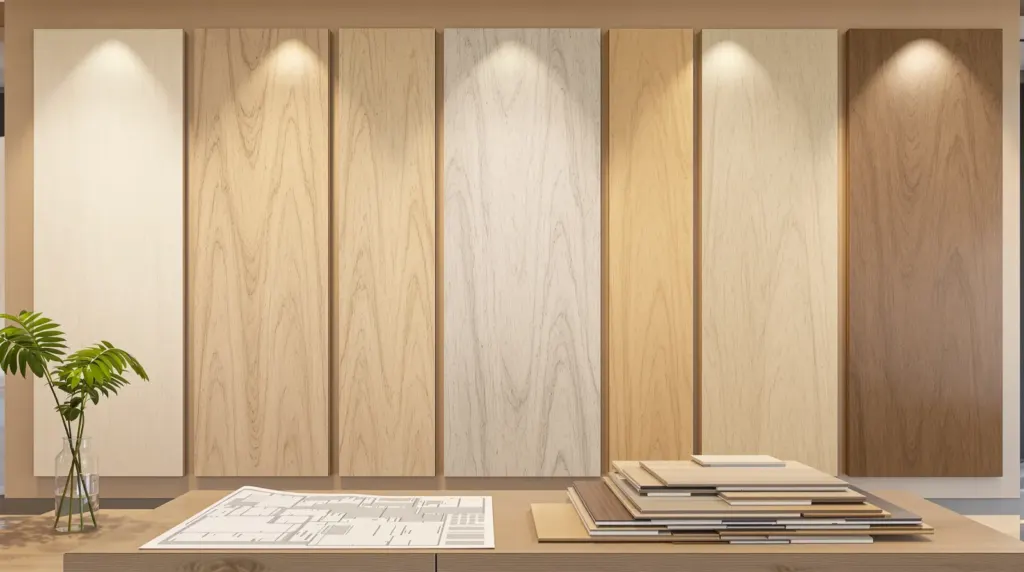
A single sample doesn’t show what a wide board does to a room. Our showroom has large wall displays, so you can see a good run of each board, wide and standard, next to each other. You’re welcome to visit us at 2/1386 Toorak Road, Camberwell, take samples home and book a free measure and quote when you’re ready. We’ll check the subfloor flatness and give you our recommendation on whether wide boards suit your rooms. You can also call us on 1300 690 160.
Questions
A wider board shows cupping more if moisture gets to its underside, but engineered construction keeps movement small. The real protection is preparation: a moisture test and barrier on concrete, and good ventilation under suspended timber floors. Those matter for every board width.
In a large room they can make the floor look calmer and more open, because there are fewer lines across it. In a small room they tend to do the opposite and look oversized. For bedrooms and studies, the standard 1900 × 190 mm plank usually suits better.
Yes, as long as each continuous floor uses one format. For example, wide boards through an open living area and standard planks in the bedrooms, with a threshold at the bedroom doors. Five colours come in both sizes, so the tone can match.
Each pack of our wide board holds six boards and covers 2.904 m². Measure the area, add a waste allowance for cuts, divide by 2.904 and round up. For example, 37.5 m² including waste needs 13 packs. We confirm the quantity when we measure.
No hard floor is soundproof. What reduces noise to the apartment below, how owners corporation rules work, and choosing board and underlay as a pair.
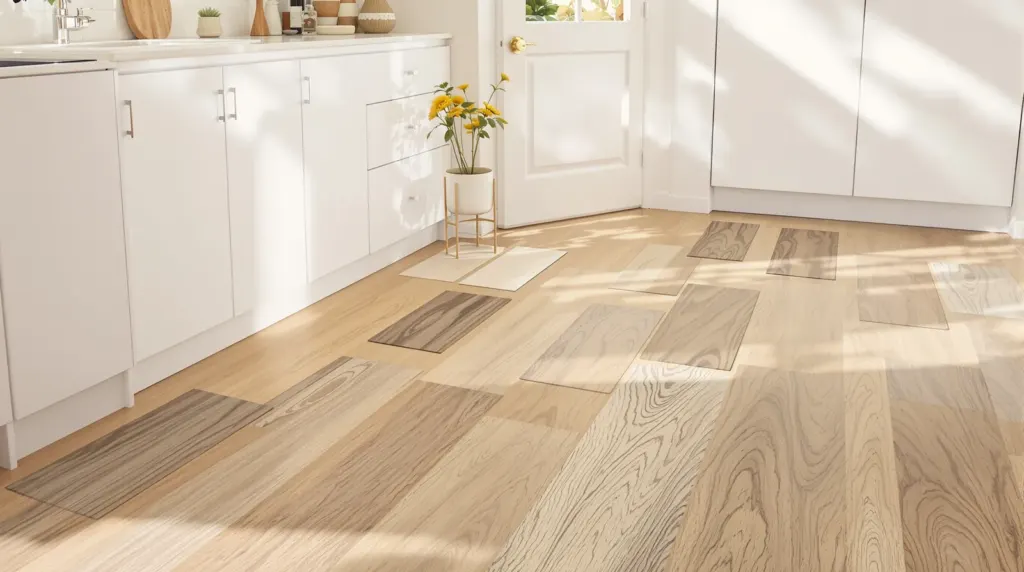
Read the guideHow to get the most out of a visit to our Camberwell showroom when you are choosing an oak floor: what to bring, what to ask and how to judge samples at home.
Read the guideStart with the light, then the joinery you're keeping, then what the floor has to hide. A practical guide to light, grey, warm and dark timber tones.
Read the guideFree measure & quote
Let us know your suburb and we will call you to arrange a time. Our quotes are itemised, so you can see the boards, preparation and labour separately.