Wide Plank Oak Flooring: Pros, Cons and When It Makes Sense
Wide boards look calmer in big rooms but ask more of the subfloor. How 2200 × 220 mm oak compares with a standard plank, with a worked room example.
Read the guide
Quick answer
Engineered oak puts a real oak wear layer on a stable layered core, so it moves less than solid timber, glues straight to a slab and comes in wide boards and herringbone. Ours has a 4 mm oak wear layer for future refinishing. It is not waterproof, oak can dent, and sanding is limited by the wear layer.
Engineered oak gives you a real oak surface on a stable layered core, so it can be glued straight to a slab, comes in wide boards and herringbone, and moves less than solid timber. Ours has a 4 mm oak wear layer, which leaves room to refinish it later. There are downsides to consider as well: it is not waterproof, oak dents under heels and dropped objects, a brushed surface holds more dirt in its texture, and the number of full sands is limited by the wear layer.
An engineered board is built in layers. The top layer, called the wear layer, is solid European oak. Underneath is a core of layers laid in different directions, which stops the board swelling and shrinking as much as a single piece of timber would. The board is sanded, finished and bevelled at the factory, so it arrives ready to lay.
Our engineered oak is 15 mm thick with a 4 mm oak wear layer, a micro bevel on the edges, tongue and groove joints and a matte brushed surface. It comes in three formats: a 1900 × 190 mm standard plank, a 2200 × 220 mm wide board, and 900 × 150 mm herringbone. There is also a reactive-finish series in the standard plank size with a more rustic, varied look. You can see all of it on our engineered oak page.
The surface you walk on is real timber rather than a printed image of timber. It feels like timber underfoot, the grain is real, and it changes with light and age the way oak does. That is the main thing that separates it from laminate and hybrid, which we compare in engineered oak vs laminate.
The cross-layered core means an engineered board moves less with changes in humidity than a solid board of the same size. That is why it can go down on a concrete slab, why wide formats are almost always engineered, and why it is the usual choice over underfloor heating where the manufacturer allows it.
Most new homes, extensions and apartments are on concrete. Engineered oak is normally glued directly to the slab after a moisture test and any levelling, with no timber battens needed. Over a timber subfloor, it can be fixed over the top.
Because the coating is applied at the factory, there is no sanding and coating on site, and no days of waiting for coats to dry with the house full of fumes. Once it is down and any adhesive has cured, it is ready to use.
A 4 mm oak wear layer is thick enough to be sanded and refinished later in the floor’s life, and most floors only need a light buff and recoat long before that. We explain the limits in can you sand engineered timber flooring.
Brushing opens the grain slightly and gives the surface texture, and the matte finish keeps glare down. Fine scratches catch less light, so they are harder to see than on a glossier floor.
Engineered oak handles everyday kitchen spills if you wipe them up. It is not designed to cope with standing water. A leaking dishwasher, a pot plant that overflows, or a wet dog that comes in every evening can mark the timber and damage the core. It is not suitable for bathrooms or laundries. For wet areas, we recommend hybrid instead.
Oak is a hardwood, though not the hardest available. A dropped cast-iron pan or a stiletto heel can leave a dent, and that dent goes into the timber itself, below the finish. If you want more resistance to dents, our Australian hardwood range includes Blackbutt and Spotted Gum, which are harder species.
The same brushed texture that hides scratches also gives dirt somewhere to settle. A soft brush head on the vacuum lifts it out. It isn’t hard work, but it is different from wiping a smooth surface.
A solid board can be sanded many times over its life. An engineered board can only be sanded while there is wear layer left. With 4 mm that is still a long life, but it is a limit, and a heavy-handed sander can use up more of it than necessary.
All timber changes colour with light over time, and oak tends to warm. A rug that sits in one spot for years will leave a paler patch under it. This is normal, and moving rugs and using blinds keeps the change even.
No two boards match exactly. There will be knots, colour shifts and grain changes. For most people, that is part of oak’s appeal. If you would prefer every board to look identical, a printed floor will suit you better.
| Good at | Not so good at |
|---|---|
| Real oak look and feel | Standing water and wet areas |
| Staying stable on slabs and in wide formats | Resisting dents from heavy impacts |
| Being ready to use soon after laying | Unlimited sanding over its life |
| Hiding fine scratches (matte brushed) | Staying spotless in its brushed texture |
| Herringbone and wide board layouts | Looking uniform from board to board |
Engineered oak is a good fit for most living areas, hallways and bedrooms in Melbourne homes, whether it’s a Californian bungalow getting a new floor over old boards or a slab-on-ground rebuild. It suits people who want timber and are happy for the floor to show some life over the years.
It is less suited to a laundry, a bathroom, a rental with a high tenant turnover, or a house where the floor gets wet every day. Laminate or hybrid make more sense there. For a household with a large, active dog, it works well if you choose a mid tone and are comfortable with some marks. A board like Natural Oak is forgiving with dust and daily wear. For a floor that looks settled from day one, the reactive-finish boards such as Westminster have deliberate variation built in.
Engineered oak covers a wide spread of products, and the label alone doesn’t tell you much. When comparing any engineered oak, including ours, these questions help separate one product from another.
If a seller is unable to answer the first question clearly, it is worth asking for more information before buying.
People often ask whether engineered oak is a compromise compared with solid boards. For most homes, we don’t believe it is. Solid timber has more material to sand over a very long life, and some people prefer it on principle. Engineered boards are more stable, go straight onto concrete, and come in wide boards and patterns that would be risky in solid. Our Australian hardwood boards are also engineered, with a 3 mm wear layer. If you want full-thickness solid boards, we also supply 18 mm solid tongue-and-groove boards. There is more detail in engineered vs solid timber flooring.
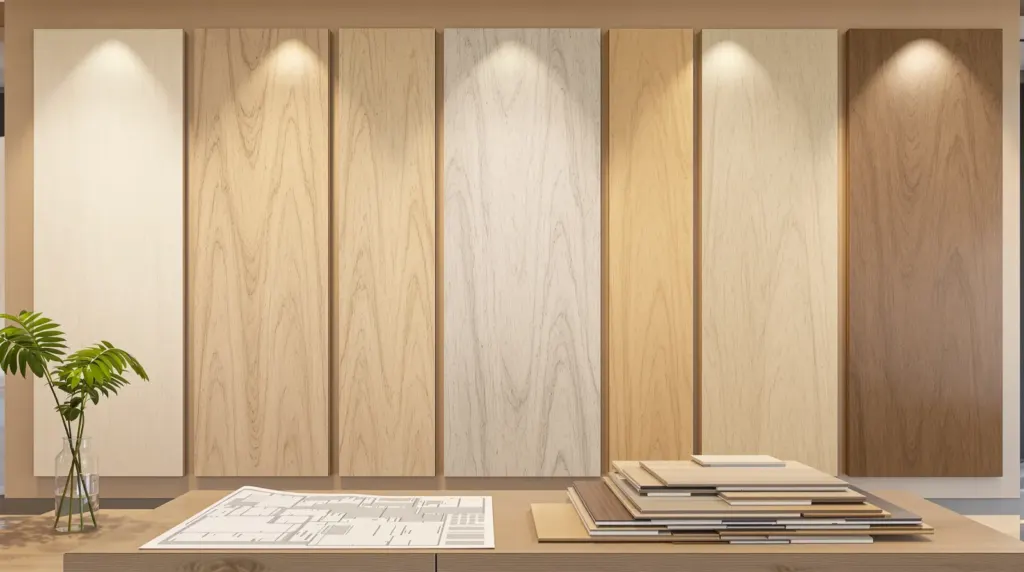
The best way to judge engineered oak is to handle it. Our showroom at 2/1386 Toorak Road, Camberwell has large wall displays, so you can see a run of each colour rather than a small chip, and you can take free samples home. When you’re ready, book a free measure and quote and we’ll check the subfloor and give you our recommendation on whether engineered oak is the right floor for the rooms you have in mind. You’re also welcome to call 1300 690 160.
Questions
Yes. The top layer is solid European oak, 4 mm thick on our boards, and that is the surface you see and walk on. The core underneath is made of layers set in different directions to keep the board stable. It is timber all the way through, just built differently from a solid board.
With sensible care, a long time. The factory finish takes the daily wear, and a buff and recoat freshens it when it gets tired. When that is no longer enough, the 4 mm wear layer allows sanding and refinishing. How often depends on traffic, grit, pets and how well the floor is looked after.
Yes, as long as spills are wiped up promptly. We recommend a mat in front of the sink and dishwasher, and please have any leak fixed straight away, because standing water can damage the timber and the core. For laundries and bathrooms, choose a water-resistant product such as hybrid instead.
Every timber floor scratches over time. On our matte brushed oak, fine scratches in the finish blend into the texture and are hard to spot. Deeper dents from dropped objects or heels go into the timber. Felt pads under furniture and mats at the doors prevent most of it.
Wide boards look calmer in big rooms but ask more of the subfloor. How 2200 × 220 mm oak compares with a standard plank, with a worked room example.
Read the guideNo hard floor is soundproof. What reduces noise to the apartment below, how owners corporation rules work, and choosing board and underlay as a pair.
Read the guideHow to get the most out of a visit to our Camberwell showroom when you are choosing an oak floor: what to bring, what to ask and how to judge samples at home.
Read the guideFree measure & quote
Let us know your suburb and we will call you to arrange a time. Our quotes are itemised, so you can see the boards, preparation and labour separately.